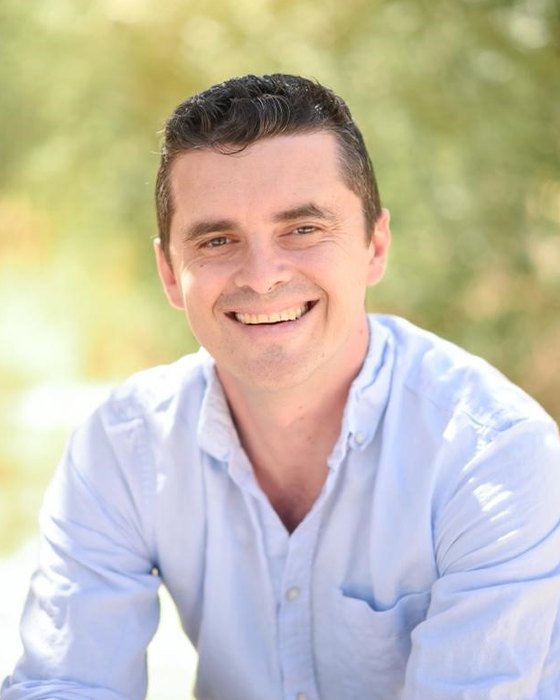
Dr. Benji Davis

Israel and Jewish education is what I do.

Dr. Benji Davis

Roles

  • Assistant Professor of Jewish EducationYeshiva University, Azrieli Graduate School
  • Director of EducationCenter for Jewish Peoplehood Education
  • Head of Israel EducationCamp Yavneh
  • FounderIMPACT Israel Education and the Israel Education Hub

Serves on

  • Board member, Network for Research in Jewish Education, and chair of its 2026 annual conference
  • Advisory board, Unpacking Israel Education, the practitioner journal of Unpacked for Educators (OpenDor Media)
  • Birthright Israel International Education Committee

About

Benji is an American-born Israeli scholar and educator whose work bridges research and practice in Israel and Jewish education.

He teaches from middle school through doctoral level, and has taught campers, gap year students, campus professionals, clergy, lay leaders and donors across the religious and political spectrum. Before his 2025 appointment at Yeshiva University, Benji received the Harold Wechsler Award for Emerging Scholars from the Network for Research in Jewish Education and held the Israel Institute Teaching and Research Fellowship in Israel Studies at George Mason University.

Dr. Benji Davis teaching a session on the Israeli political map

Teaching and Consulting

Teaching

Speaking topics and workshops brought to your community, from a single evening lecture to a scholar-in-residence weekend or a multi-session series. Every session is adapted to the group in front of it.

ShabbatFriday night through Havdalah, with drashot, meals and sessions across the community
A weekendA fuller arc: multiple talks, a seminar, and time with lay leaders and staff
A day with your communityMorning to evening, adapted to the groups you want reached
On your trip to IsraelJoining your group as educator, convener and thought leader on the ground

Consulting

I help you root Israel and Jewish education in the area of scholarship that fits your context, connect you to the organizations already doing the work, and, where nothing exists yet, design and build a plan of action.

01 · First visionClarify the visionName the Jewish why, the learners, and the education goals that matter most.
02 · Strategic mentorshipConnect the fieldBring in the people, resources, models and mentors that fit your vision.
03 · ImplementationBuild what is missingCreate, adapt and implement the tools you need when the right resource does not yet exist.

This is partnership over time, from first conversation to lasting change: articulate a vision for Israel and Jewish education in your setting, build out a plan, and hone the craft of the educators who will carry it.

Speaking Topics

23 sessions in three tracks. Pick one for an engaging talk, or build a series of sessions.

Israel, Zionism and the Jewish World

9 sessions
  • What are the main challenges facing Israeli society in the coming decades? An analysis of societal trends, issues within the Jewish world, and long-term national security threats.

  • The purpose of Israel and its role in the lives of Jews outside Israel. Participants consider the idea of Jews as a nation and reflect on their own connection to Israel.

  • Why is one people’s Jewishness rooted in ethno-nationalism and another in liberal-religious values? How the two largest Jewish communities understand what it means to be Jewish in the 21st century.

  • A breakdown of the Israeli political system, its pros and cons, where the political currents are flowing, and what the political map may look like in the future.

  • The challenge of Israel being a Jewish state for all Jews of different streams, beliefs and backgrounds. Should buses run on Shabbat in Tel Aviv? Does the future of Torah study require an army exemption for certain yeshiva students? Can the Western Wall be welcoming to all denominations?

  • The narratives in Israeli society for and against the role of religion in government and broader society, and its place in the Israel/Diaspora relationship.

  • Why are the United States and Israeli governments so close? The many layers of the relationship, and where it may be headed.

  • Israel functions as a compromise between different Jewish and non-Jewish groups: secular Jews, national religious Jews, ultra-Orthodox Jews and Arabs. These compromises and their impact on Israeli society today.

  • What is the Zionist idea, and what are its roots? A brief history of Jewish nationalism from antiquity to today.

Conflict and Geopolitics

10 sessions
  • A deep dive into how Jews and Arabs, Israelis and Palestinians, perceive the same land as their own, exploring historical, theological and national claims.

  • What are the “territories”? Why do some say they are occupied, while others say they are disputed or liberated? What are Areas A, B and C? A short introduction to the West Bank / Judea and Samaria.

  • A historical introduction to the century-long conflict between Arabs and Jews in the Holy Land.

  • How does today’s news fit into the local political context and the greater geopolitical challenges and opportunities facing Israel?

  • Why is the land Israel conquered, liberated or occupied in 1967 still not sovereign Israeli territory? Israel’s relationship with the West Bank and its implications for politics, security and Zionist identity.

  • Three major ways to frame the Israeli-Palestinian conflict: geopolitics, social justice and tribal identity. Participants explore each lens and what it implies for meaningful discussion and solutions.

  • Why do most people focus on the Israeli-Palestinian conflict when Israel’s current war is against Iran and its proxies? A shift of focus to Israel’s broader security concerns.

  • Political, military and diplomatic. Israeli leaders weigh many factors, from restoring deterrence to maintaining regional power. Israel’s strategic objectives across all three dimensions.

  • How Israelis and Palestinians view the wars of 1948 and 1967 differently: one as securing independence, the other as catastrophe and occupation.

  • People love to say the conflict is complex. Some elements genuinely are, others are quite simple. This session helps learners tell the difference.

The Israel Conversation and Antisemitism

4 sessions
  • Many get confused about the boundary between legitimate criticism of Israel and outright anti-Zionism. A look at criticism of Israel within the Jewish community, and the line between critique and delegitimization.

  • Antisemitism was once thought to be a thing of the past, yet it persists. The historical, societal and political contexts of its rise in the West, why it is unique and persistent, and what can be done about it.

  • One of today’s most polarizing and complex topics. A model for engaging with different paradigms and political lenses, and an introduction to the “Rootedness and Respect” approach for productive discussion.

  • Why do young Jewish progressives feel pressured to check their Zionism at the door in social justice spaces? The philosophy, ethics and culture behind this phenomenon.

Workshops

Professional development for faculties, staff teams and educator cohorts, built on my research

Scholarship and essays

Peer-reviewed research

  1. 2026
    The PCK of ethical identity educationOxford Review of Education · with Hanan Alexander
  2. 2025
    Liberal Jewish identity and the pedagogy of Israel educationJournal of Religious Education 73, 207–230 · with Hanan Alexander
  3. 2025
    Teaching Palestinian perspectives and the pedagogy of “historical empathy”Chapter in Education after October 7, ed. Matt Reingold (Academic Studies Press), 112–130
  4. 2024
    “You never told me”: The pedagogical content knowledge of Israel educationContemporary Jewry 44, 369–395 · with Hanan Alexander
  5. 2023
    Israel education: A philosophical analysisJournal of Jewish Education 89(1), 6–33 · with Hanan Alexander

Jewish scholarly publications

  1. 2026
    The DMC at Camp: Turning a Phenomenon into a Peoplehood PedagogyThe Peoplehood Papers, special edition on Jewish camping (CJPE and Foundation for Jewish Camp)
  2. 2026
    Complicating complexity: Israel education after October 7Sources: A Journal of Jewish Ideas, Shalom Hartman Institute · with Hanan Alexander
  3. 2026
    From immersion to deliberation: A model for Hebrew identity educationJewish Educational Leadership, The Lookstein Center
  4. 2026
    What we know about Israel in Jewish education: A literature reviewReimagining Israel Education, The Jewish Education Project · with Ezra Kopelowitz
  5. 2026
    A Klal Yisrael orientation for the Judaic studies curriculumHaYidion, Prizmah: Center for Jewish Day Schools
  6. 2026
    Am Yisrael Chai: Education for belonging to a “living Jewish people”Reimagining Israel Education, The Jewish Education Project
  7. 2025
    Foundational story pedagogy in Israel educationHaYidion, Prizmah · with Matt Reingold and Ezra Kopelowitz
  8. 2024
    Israel education in a post-October 7th worldJewish Educational Leadership 22(2), The Lookstein Center · with Michael Unterberg and Alan Goldman
  9. 2023
    Jewish peoplehood, Israel education, and liberal religious Jewish identityThe Peoplehood Papers 33, 22–25, Center for Jewish Peoplehood Education

Research in progress

  1. Book
    The philosophy and pedagogy of Israel education as a vehicle of ethical Jewish identityIn progress · with Hanan Alexander
  2. Study
    Teaching Israel in Introduction to Judaism coursesA national study of how rabbis teach Israel to those considering conversion. Analysis in progress
  3. Study
    Day school graduates and the Israel conversation on campusWith Ari Y. Kelman, Stanford University. Data collection begins 2026–27
  4. Study
    The orientation of Israeli tour guides as Jewish educatorsData collection ongoing

Op-eds and public writing

  1. 2026
    How Jewish education can make things betterJewish Journal · with Michael Unterberg and Alan Goldman
  2. 2025
  3. 2025
    Vibes are not enough: Israel education needs researcheJewishPhilanthropy · with Ari Y. Kelman
  4. 2023
    How should Jewish educators handle the Israel-Hamas war in their classrooms?J. The Jewish News of Northern California · with Hanan Alexander

Partners

Where I have taught, who I have worked with

Get in touch

Tell me your audience and what you are trying to accomplish, and we will shape it together.

Dr. Benji Davis teaching a Masa Israel group in Jerusalem